
Are These WEEE Changes About to Catch Your Business Off Guard?
- Online marketplaces must now pay their fair share for e-waste recycling
- Vapes added as new WEEE Category 15 from June 2025
- Disposable vapes banned from sale - 1 June 2025
- New Circular Economy Strategy coming throughout 2025
The UK government has announced the most significant reforms to electronic waste regulations in a decade. Here's what it means for your business.
The way the UK handles electronic waste is about to change dramatically. On 10 December 2024, Circular Economy Minister Mary Creagh announced sweeping reforms to the Waste Electrical and Electronic Equipment (WEEE) regulations that will affect online retailers, vape producers, and businesses across the country.
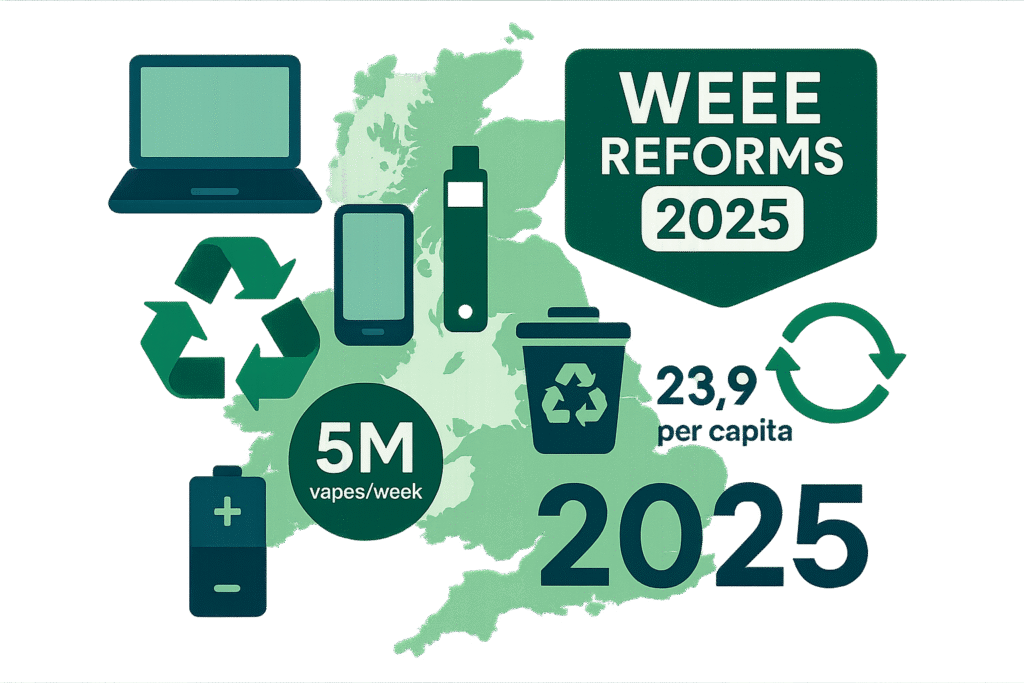
These changes represent the government's most ambitious attempt yet to tackle the UK's growing e-waste crisis. With nearly five million disposable vapes being thrown away every week and over 100,000 tonnes of household electricals ending up in bins annually, the reforms aim to create a level playing field whilst significantly improving collection and recycling rates.
For businesses managing IT assets, understanding these regulatory changes is essential. Whether you're an online retailer, a manufacturer, or simply a company looking to dispose of end-of-life IT equipment responsibly, these reforms will shape how you operate in 2025 and beyond.
People Also Ask
What is IT Asset Disposal (ITAD)?
Answer: ITAD is the secure, compliant retirement of end-of-life IT equipment including data destruction, asset tracking, and environmentally responsible recycling. It ensures businesses meet GDPR and WEEE regulations.
What are the consequences of non-compliance in IT disposal?
Answer: GDPR fines up to £17.5 million or 4% of global turnover, Environment Agency prosecution for WEEE violations, reputational damage from data breaches, and personal liability for directors.
How do you ensure GDPR compliance during IT asset disposal?
Answer: Use a certified IT recycler with ISO 27001 accreditation, ensure data erasure meets NCSC guidelines (or physical destruction), obtain serialised certificates of destruction, and maintain audit trails for every data-bearing device.
Is a factory reset sufficient for data protection?
Answer: No. The ICO explicitly states factory reset is insufficient for business equipment. Data can be forensically recovered. Use certified data wiping software (minimum 3-pass overwrite) or physical destruction.
What is the IT Asset Disposal process?
Answer: 1) Asset inventory and audit, 2) Secure collection, 3) Data destruction (certified), 4) Testing and grading, 5) Refurbishment or recycling, 6) Certificate of destruction, 7) Environmental compliance reporting.
Online Retailers: A Level Playing Field
Perhaps the most impactful change for the business world is the introduction of Extended Producer Responsibility (EPR) for online marketplaces. For years, these platforms have been able to facilitate the sale of electrical goods without contributing to the cost of recycling them at end of life.
The Problem with Online Sales
Recent research found that a staggering 76% of LED bulbs sold on major online marketplaces were non-compliant with WEEE regulations. This gives unscrupulous sellers an unfair advantage over legitimate UK retailers who do pay their fair share.
What's Changing
Under the new regulations, online marketplaces will be required to:
- Collect data on electrical products sold through their platforms (from August 2025)
- Contribute to WEEE collection and recycling costs (from January 2026)
- Ensure sellers comply with producer registration requirements
This levels the playing field for UK businesses and should significantly increase the funding available for e-waste collection and recycling infrastructure.
Vapes: New Category and Complete Ban on Disposables
The second major reform addresses the explosion in disposable vape waste. These devices contain lithium batteries and electronic components that make them WEEE, yet the vast majority end up in general waste streams.
The Scale of the Problem
The statistics are alarming:
- Nearly 5 million disposable vapes thrown away every week in the UK
- Battery fires at waste facilities have increased 71% in recent years
- Enough lithium to make 5,000 electric car batteries discarded annually in vapes alone
New WEEE Category & Ban
From 1 June 2025:
- Vapes will become a dedicated WEEE category (Category 15)
- Disposable vapes will be completely banned from sale
- Retailers found breaking the rules face immediate fines with all products seized
- Repeat offenders face unlimited fines or imprisonment
This ban has been coordinated across all four UK nations, with Scotland, Wales, and Northern Ireland implementing equivalent measures simultaneously.
The UK E-Waste Problem in Numbers
To understand why these reforms are so urgently needed, consider the scale of the UK's e-waste challenge:
| Metric | Figure |
|---|---|
| E-waste per capita (UK) | 23.9 kg - 2nd highest globally |
| Household electricals in bins annually | 100,000+ tonnes |
| Disposable vapes discarded weekly | ~5 million |
| Battery fire increase at waste facilities | 71% |
| LED bulbs non-compliant on marketplaces | 76% |
The UK generates 23.9kg of e-waste per person annually - second only to Norway globally. This represents both a significant environmental challenge and a missed economic opportunity, as valuable materials in discarded electronics go unrecovered.
Implementation Timeline: Key Dates
Understanding the implementation timeline is crucial for business planning:
June 2025
- Disposable vapes banned across all four UK nations
- WEEE Amendment Regulations come into force
- Vapes become WEEE Category 15
August 2025
- Online marketplaces begin data collection requirements
- Platforms must track electrical products sold
January 2026
- New WEEE costs commence for online platforms
- Marketplaces must contribute to recycling infrastructure
2025-2026 (Ongoing)
- Full Circular Economy Strategy rollout
- Consultation on extended deposit return schemes
- Potential further reform announcements
Business Compliance Checklist
Whether you sell electrical products, manage corporate IT assets, or simply want to ensure your business disposes of equipment responsibly, here's what you should do:
For All Businesses
- Review your IT disposal processes - Ensure you're working with properly certified ITAD partners
- Audit your current equipment - Identify assets approaching end-of-life
- Budget for compliance - Factor potential new costs into 2025/26 planning
- Train relevant staff - Ensure procurement and facilities teams understand new obligations
For Online Sellers
- Verify your producer registration status
- Prepare for marketplace data collection requirements
- Review product compliance across your electrical range
For Vape Retailers
- Plan inventory transition before 1 June 2025
- Consider switching to refillable alternatives
- Implement proper disposal for existing stock
How Innovent Recycling Can Help
As these regulatory changes come into effect, working with a certified IT asset disposition partner becomes more important than ever. Innovent Recycling provides comprehensive support for businesses navigating the evolving compliance landscape:
WEEE Collection
Free collection for qualifying IT equipment from anywhere in the UK. We handle all documentation and compliance requirements.
Secure Data Destruction
NIST 800-88 compliant data wiping and physical destruction with full certification - essential for GDPR compliance.
ISO 27001 Certified
Our information security management system is independently audited, giving you confidence in our processes.
Full Audit Trail
Complete documentation including certificates of destruction and recycling reports for your compliance records.
Our comprehensive services ensure your business stays compliant whilst maximising the value recovered from end-of-life IT assets.
Frequently Asked Questions
What are the key changes in the UK WEEE regulations for 2025?
The major changes announced in December 2024 include:
- Online marketplace obligations - Platforms must collect data on electrical sales (Aug 2025) and contribute to recycling costs (Jan 2026)
- New WEEE Category 15 - Vapes become a dedicated category from June 2025
- Disposable vapes ban - Complete ban on sale from 1 June 2025 across all UK nations
- Stricter enforcement - Immediate fines and product seizures for non-compliance
These reforms create a level playing field between online and traditional retailers while tackling the growing vape waste crisis.
When do the new WEEE regulations come into effect?
The implementation happens in phases:
- June 2025 - Disposable vapes ban takes effect; vapes become WEEE Category 15
- August 2025 - Online marketplaces begin data collection requirements
- January 2026 - Online platforms must contribute to WEEE recycling costs
The Circular Economy Strategy will continue to roll out throughout 2025-2026 with potential additional reforms.
How do the changes affect online retailers and marketplaces?
Online marketplaces face significant new obligations:
- Must track and report electrical products sold through their platforms
- Required to ensure third-party sellers are registered as WEEE producers
- Must contribute financially to e-waste collection and recycling infrastructure
- Face penalties for facilitating sales of non-compliant products
Research found 76% of LED bulbs on major marketplaces were non-compliant - these reforms aim to close this loophole.
Why are vapes being added as a separate WEEE category?
The UK faces a vape waste crisis:
- Nearly 5 million disposable vapes thrown away every week
- Battery fires at waste facilities have increased 71%
- Enough lithium to make 5,000 electric car batteries discarded annually in vapes alone
Creating Category 15 specifically for vapes enables targeted collection infrastructure, better tracking of disposal, and dedicated funding for proper recycling of these battery-containing devices.
What penalties apply for non-compliance with WEEE regulations?
The enforcement regime is being strengthened:
- Immediate fines - For first-time violations
- Product seizure - All non-compliant stock confiscated
- Unlimited fines - For repeat offenders
- Imprisonment - Potential criminal prosecution for serious violations
The government is taking a zero-tolerance approach, particularly around the disposable vapes ban.
How does this affect businesses with IT equipment to dispose of?
While the headline changes focus on vapes and online retailers, all businesses managing IT assets should:
- Review current WEEE compliance procedures
- Ensure IT recycling partners are properly registered
- Obtain certificates of destruction for data-bearing equipment
- Maintain audit trails for regulatory compliance
Working with an accredited WEEE recycler like Innovent ensures full compliance with current and upcoming regulations.
What is the UK's current e-waste problem?
The UK has one of the world's worst e-waste records:
- 23.9kg per capita - Second highest globally after Norway
- 100,000+ tonnes - Household electricals in bins annually
- Low collection rates - Most e-waste never reaches proper recycling
- Resource loss - Valuable materials including gold, copper, and rare earths are wasted
The reforms aim to significantly improve collection rates and resource recovery.
How can businesses prepare for the new regulations?
Key preparation steps:
- Audit current practices - Review how electrical waste is currently handled
- Check partner compliance - Ensure waste contractors are properly registered
- Update procedures - Implement tracking for all electrical equipment disposal
- Retain documentation - Keep certificates of destruction and audit trails
- Staff training - Ensure employees understand disposal requirements
Contact us for a free compliance consultation.
What is Extended Producer Responsibility (EPR) and why does it matter?
EPR makes producers financially responsible for the end-of-life management of their products:
- Manufacturers and importers pay fees towards recycling infrastructure
- Costs are proportional to the amount of product placed on market
- Creates incentive for eco-design and recyclability
- Funds collection points and proper recycling facilities
The new regulations extend EPR to online marketplaces, closing a significant loophole in the current system.
Where can I recycle business IT equipment and ensure WEEE compliance?
Innovent Recycling provides comprehensive, compliant IT disposal services:
- Free collection - For 10+ items nationwide
- ISO 27001 certified - Data destruction with full audit trails
- WEEE compliant - Environment Agency registered
- Zero landfill - 100% recycling or refurbishment
- Certificate of destruction - For every device processed
Book a free collection or call 0151 355 5482.
Looking Ahead: The Circular Economy Journey
The December 2024 WEEE reforms represent more than regulatory changes - they signal a fundamental shift in how the UK approaches electronic waste. By making online platforms responsible for their share of recycling costs and tackling the vape waste crisis head-on, the government is laying the groundwork for a more sustainable electronics ecosystem.
For businesses, the message is clear: proactive compliance is essential. Those who adapt early will be best positioned to manage costs, maintain customer trust, and contribute to the UK's environmental goals.
The circular economy isn't just about recycling - it's about rethinking how we design, use, and recover value from electronic products. These reforms are a significant step on that journey.
Need help ensuring your business is prepared for the new WEEE regulations? Contact Innovent Recycling today for a free consultation on your IT asset disposal requirements.
Ready to Ensure Your Business is WEEE Compliant?
Get free, no-obligation advice on IT asset disposal and WEEE compliance. Our team will assess your needs and provide a tailored solution.
Share This Article
Found this guide helpful? Share it!
Help others discover these important WEEE regulation changes



About Innovent Recycling
Innovent Recycling is a UK-based specialist in secure IT asset disposal and recycling. With ISO 27001 certification and Environment Agency T11 exemption, we provide comprehensive, compliant recycling solutions for businesses across the United Kingdom.
Our services include:
- IT Equipment Recycling - Secure, compliant disposal of all business IT assets
- Certified Data Destruction - HMG Infosec Standard 5 compliant wiping and shredding
- WEEE Compliance Management - Full regulatory compliance and documentation
- Nationwide Collections - Free collection service available UK-wide
Trusted by businesses across the UK for secure, compliant IT disposal. View our accreditations and certifications.
Ready for Compliant IT Recycling?
Get a free collection quote and protect your business from compliance risks.
Or call us on 0151 355 5482