
Last Updated: April 2026 — Updated to reflect DEFRA Digital Waste Tracking obligations (October 2026 deadline), ICO enforcement examples, and UK Scope 3 Category 12 sustainability reporting requirements (mandatory 2027).
Is Your Business Exposed to IT Disposal Risks?
Corporate laptop disposal is a critical compliance issue: over 60% of UK businesses admit they don't know if their disposed IT equipment is properly data-wiped. That statistic should worry every IT manager reading this. In 2024 alone, the Information Commissioner's Office (ICO) issued over £45 million in fines for data breaches, many of which involved improperly disposed devices.
With corporate laptop refresh cycles accelerating and remote work creating unprecedented device sprawl, your organisation likely has more end-of-life equipment than ever before. Each device is a potential data breach, compliance violation, or environmental liability. The average UK business replaces 30-40% of its laptop fleet every three years, creating a mounting disposal challenge that most organisations aren't properly equipped to handle.
of UK businesses don't know if their IT equipment is properly data-wiped
How much does corporate laptop disposal cost?
Answer: £25-40 per device for professional service, or free collection for 10+ items.
Professional corporate laptop disposal typically includes:
- Free collection: For batches of 10+ devices (most UK recyclers)
- Data destruction: £15-25 per device for certified wiping
- Physical shredding: £20-35 per device for maximum security
- Full documentation: Certificates of destruction included
Budget 8-10% of new device costs when planning laptop refresh programmes. Many businesses use free IT recycling collection services to offset these costs.
Is laptop disposal free for businesses?
Answer: Yes, most UK IT recyclers offer free collection for 10+ laptops.
Reputable recyclers generate revenue by refurbishing functional equipment, allowing them to offer free collection including:
- Free nationwide collection
- Certified data destruction
- Waste transfer notes
- Certificates of destruction
Why Corporate Laptop Disposal Is a Legal Minefield
Corporate laptop disposal sits at the intersection of three major regulatory frameworks: data protection law, waste management regulations, and environmental compliance. Get any of these wrong and your business faces significant fines, legal action, and reputational damage.
The legal landscape for IT disposal has become considerably more complex since Brexit, with UK-specific interpretations of data protection requirements diverging from EU standards. Businesses can no longer rely on generic "GDPR compliance" statements from recycling vendors without understanding the specific UK requirements.
What are the legal obligations for businesses disposing of laptops in the UK?
Answer: Businesses must comply with UK GDPR data protection, WEEE waste regulations, and environmental law.
Your legal obligations include:
- UK GDPR compliance: Secure data destruction (Article 5(1)(f))
- WEEE Regulations 2013: Compliant disposal via licensed carriers
- Duty of Care: Audit trail proving responsible disposal
- Record retention: Minimum 2 years for disposal documentation
GDPR and Data Protection Requirements
Under UK GDPR, businesses have a legal obligation to ensure personal data is securely destroyed when devices reach end of life. Article 5(1)(f) requires "appropriate security of the data," which extends throughout the entire data lifecycle, including disposal. The ICO has been clear: selling devices on eBay with a factory reset doesn't meet this standard.
In 2024, a Manchester-based recruitment firm faced a £180,000 fine after disposed laptops containing candidate data were found at a recycling centre with accessible hard drives. The ICO's investigation revealed the company had no documented disposal process and couldn't prove data destruction. This case established that businesses must maintain an audit trail of disposal activities.

Critical Compliance Alert
The Environment Agency can issue fixed penalty notices of up to £300 for each item improperly disposed, with unlimited fines for serious breaches. Ignorance isn't a defence.
Data Destruction Standards: What Certificates Actually Matter
Not all data destruction certificates are created equal. The IT recycling industry is rife with meaningless paperwork that provides no actual proof of secure data erasure. Understanding which standards matter and which are worthless is critical to protecting your business from corporate laptop disposal risks.
Is a factory reset sufficient for data protection?
Answer: No. Factory reset does NOT securely erase data.
Factory reset makes data inaccessible to casual users but doesn't overwrite data sectors. Forensic recovery tools can retrieve substantial data in minutes. UK GDPR requires:
- Certified wiping: Minimum 3-pass overwrite (HMG Infosec Standard 5)
- Physical destruction: Industrial shredding for maximum security
- Documentation: Serial number-specific certificates
The ICO explicitly states factory reset alone doesn't meet data protection obligations for business equipment disposal.
What certificate do you get after laptop disposal?
Answer: Certificate of Destruction listing every data-bearing device's serial number and destruction method.
Professional recyclers provide:
- Individual serial numbers: Every device listed
- Destruction method: Software wiping standard or physical destruction
- Date and location: When and where processing occurred
- Compliance confirmation: GDPR and WEEE compliance statement
- Waste transfer notes: Legal chain of custody documentation
The HMG Infosec Standard 5 Baseline
For UK businesses handling any sensitive data, HMG Infosec Standard 5 (now part of the National Cyber Security Centre guidelines) represents the gold standard for data destruction. Originally developed for government use, it's now widely recognised as best practice for commercial organisations.
The standard defines three levels of data sanitisation based on the sensitivity of information: basic (single overwrite), enhanced (three-pass overwrite), and secure (seven-pass overwrite or physical destruction). Most corporate laptops containing business-critical or personal data require enhanced or secure level destruction through professional data destruction services.
"Factory reset functions are designed for convenience, not security. Forensic recovery tools can retrieve substantial amounts of data from reset devices in minutes."
of refurbished laptops studied contained recoverable business data
Related Reading
For more detail on how data is permanently destroyed before disposal, see our related guides:
- Hard Drive Shredding vs Wiping: Which Is Right for Your Business? - Compare HMG IS5 certified methods
- IT Equipment Disposal: Complete Checklist for UK Businesses - Step-by-step disposal process
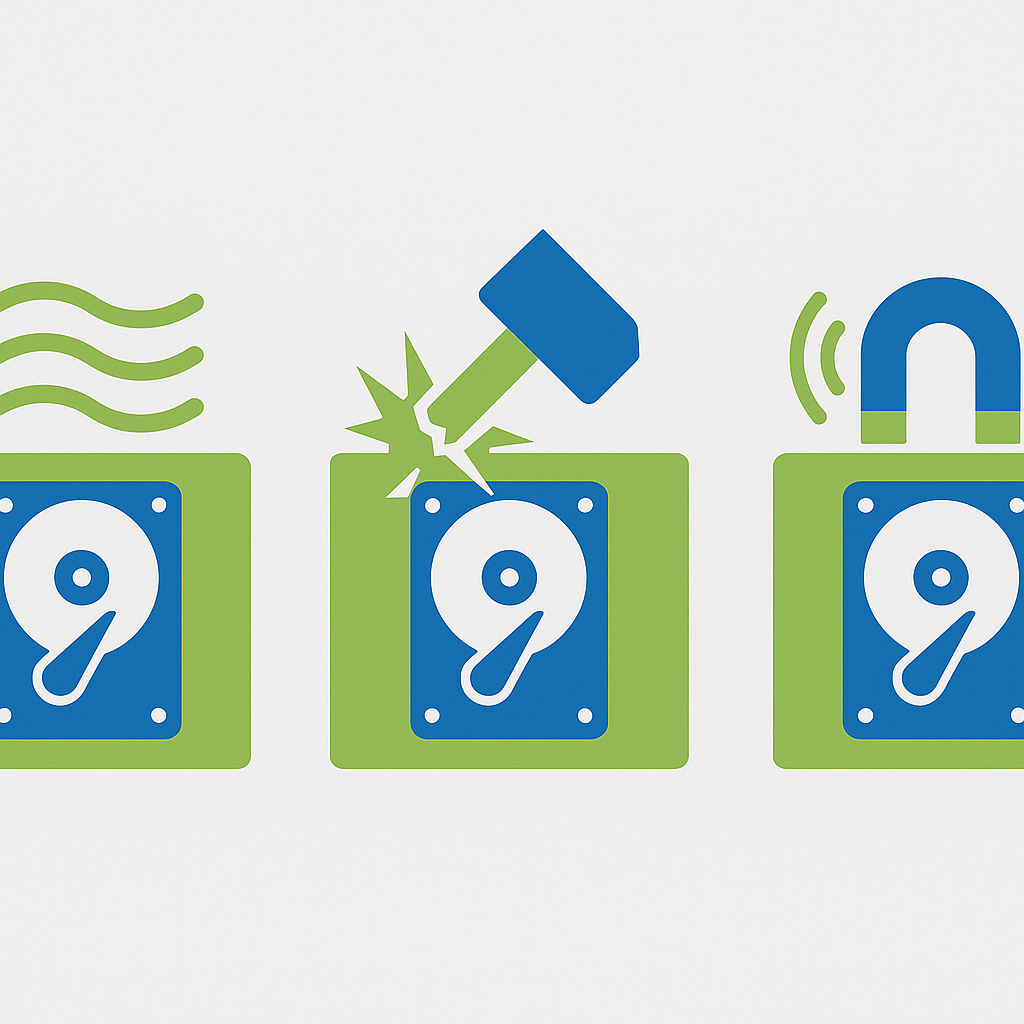
How is data destroyed on corporate laptops?
Answer: Professional recyclers use certified software wiping or industrial shredding.
Software wiping (for functional drives):
- HMG Infosec Standard 5 compliant (minimum 3-pass overwrite)
- NIST 800-88 approved methods
- Serial number-specific certificates generated
Physical destruction (for damaged drives or maximum security):
- Industrial shredding to 6mm particles
- Witnessed destruction available
- Photographic evidence provided
WEEE Compliance Requirements for UK Businesses
WEEE regulations are often misunderstood by businesses, who assume they only apply to manufacturers or retailers. In reality, any organisation disposing of electrical equipment has specific legal obligations that must be met to avoid prosecution.
Who Is Responsible for Business WEEE?
Under the WEEE Regulations 2013 (as amended), the "holder" of business waste electrical equipment is responsible for ensuring compliant disposal. This means if you're disposing of corporate laptops, you are legally responsible, regardless of whether you purchased them new, leased them, or acquired them second-hand.
Many businesses don't realise that WEEE obligations extend to equipment owned by employees working remotely. If your company provided the laptop, you're legally responsible for its compliant disposal, regardless of where the employee is located. Professional WEEE recycling services can help ensure compliance.

Pro Tip
Verify your recycler's waste carrier license and environmental permits on the Environment Agency's public register. Don't just accept certificates at face value.
How to Calculate the True Cost of Your Laptop Refresh
Most businesses drastically underestimate the total cost of a corporate laptop refresh by focusing solely on new device acquisition costs and ignoring the substantial expense of compliant disposal, data security, and potential liability.
Direct Disposal Costs
The immediate costs of corporate laptop disposal typically include:
- Collection and logistics: £2-5 per device for scheduled collection
- Data destruction: £15-25 per device for certified software-based wiping
- Physical destruction: £20-35 per device for shredding
- Disposal and recycling: £8-15 per device for WEEE-compliant treatment
For a typical 100-device laptop refresh, direct disposal costs range from £2,500-4,500, depending on the security level required and collection logistics. Many businesses opt for free IT recycling collection services to offset these costs.

ICO fine for improper laptop disposal in 2024
Choosing a Certified IT Recycling Partner
The corporate IT recycling industry includes both highly professional operations with genuine environmental and security credentials and cowboys operating from industrial units with no proper authorisation. Choosing the wrong partner puts your business at significant risk.
Essential Certifications to Verify
When selecting an IT recycling partner, verify these essential certifications:
- Environment Agency registration: Valid waste carrier license and appropriate exemptions
- Waste carrier license: Upper-tier license required
- ISO 27001: Information Security Management
Don't just accept certificates at face value. Verify them independently. Waste carrier licenses and environmental permits are publicly searchable on the Environment Agency's register. Learn more about Innovent's accreditations.
Red Flags to Watch
If a recycler offers suspiciously high prices, is reluctant to provide site visits, uses generic certificates, or operates cash-only, walk away. These are signs of unprofessional operations.
The Corporate Laptop Disposal Process: Step by Step
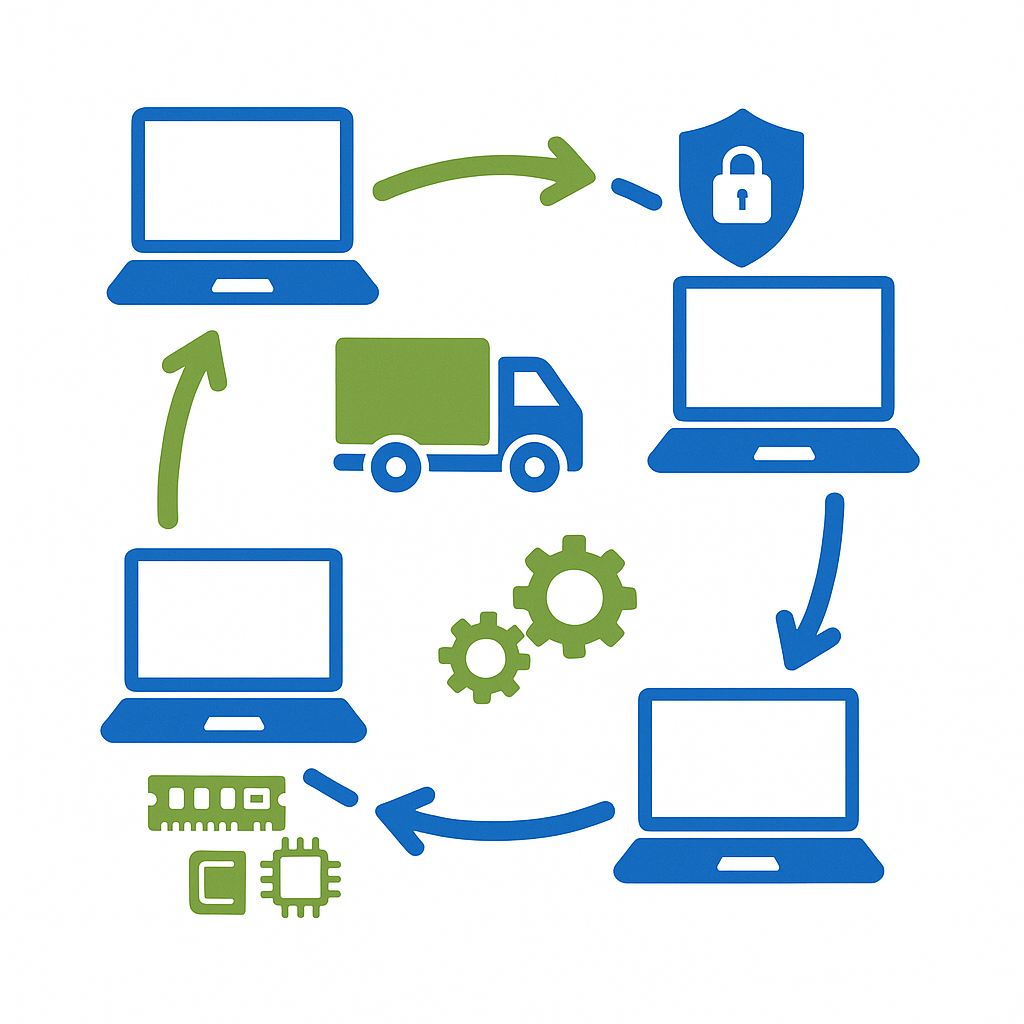
Understanding the complete disposal process helps you identify potential security or compliance gaps in your existing procedures.
The 7-Step Process
- Pre-Collection Asset Inventory - Record serial numbers and specifications
- Secure On-Site Storage - Locked area with controlled access
- Collection and Chain of Custody - Documented pickup with waste transfer notes
- On-Site Processing and Data Destruction - Certified wiping or physical destruction
- Triage and Component Recovery - Functionality testing and grading
- Materials Recycling - 85-95% recovery rate by weight
- Documentation and Reporting - Certificates and audit trail
Professional recyclers offering nationwide collection services can manage this entire process, ensuring corporate laptop disposal compliance at every stage.
7 Critical Mistakes That Make Your IT Disposal Non-Compliant
Even well-intentioned businesses make mistakes that create serious compliance and security risks. These are the most common errors:
1. Relying on Factory Resets
Factory reset doesn't securely overwrite data sectors. Forensic recovery tools can retrieve data. Always use certified data destruction methods.
2. Using Non-Certified Recyclers
Choosing the cheapest quote without verifying certifications is a false economy.
3. Failing to Maintain Documentation
Generic receipts don't satisfy regulatory requirements. Need device-specific serial numbers with proper asset reporting and certification.
4. Storing Equipment Indefinitely
Creates data security, environmental, and space cost risks. Establish regular disposal schedules.
5. Donating Without Processing
Doesn't satisfy WEEE obligations and creates data protection risks.
6. IT Department Wiping
Unless using certified software with verifiable certificates, doesn't meet compliance standards.
7. Ignoring Remote Worker Devices
You're legally responsible for all company-owned equipment regardless of location.
Key Takeaways
- Legal obligations are extensive: GDPR, WEEE regulations, and environmental protection law govern disposal. Non-compliance carries significant fines.
- Factory resets are never sufficient: Certified wiping (minimum three-pass) or physical destruction required.
- Only use properly licensed recyclers: Verify their waste carrier license and environmental permits with the Environment Agency.
- Documentation is your evidence: Maintain device-specific records for minimum two years.
- Budget 8-10% of new device costs: The cost of non-compliance vastly exceeds proper disposal.
- Residual value can offset costs: Functional devices retain 15-30% of original value after three years.
- Common mistakes are expensive: Non-certified recyclers, factory resets, and poor documentation have serious consequences.
Frequently Asked Questions
What happens to laptops after corporate disposal?
After collection, corporate laptops undergo secure data destruction (certified wiping or physical destruction), hardware testing, component harvesting for refurbishment, and responsible recycling of remaining materials. Certified recyclers provide audit trails and certificates of destruction for every data-bearing device, ensuring compliance with GDPR and WEEE regulations.
How much does corporate laptop disposal cost?
Professional corporate laptop disposal typically costs £25-40 per device for comprehensive service including collection, certified data destruction, WEEE-compliant recycling, and full documentation. Volume discounts apply for larger batches. Free collection is often available for 50+ devices. Factor in 8-10% of new device costs when budgeting for laptop refresh programmes.
Is factory reset sufficient for data security?
No. Factory reset makes data inaccessible to casual users but doesn't overwrite data sectors, allowing forensic recovery. UK GDPR requires secure data destruction through certified wiping software (minimum three-pass overwrite) or physical destruction. ICO guidance explicitly states factory reset alone doesn't meet data protection obligations for business equipment disposal.
Do businesses need special licenses to dispose of laptops?
Businesses don't need licenses to dispose of laptops, but they must use licensed carriers and properly permitted facilities. Your recycling partner must hold an Environment Agency waste carrier license and appropriate waste exemptions or permits covering IT equipment. You're legally responsible for verifying their authorisation and retaining documentation proving compliant disposal.
How long should we keep disposal records?
WEEE regulations require businesses to retain disposal records for minimum two years. However, GDPR has no statute of limitations on data breach claims, so maintaining records indefinitely is advisable. Records should include device serial numbers, waste transfer notes, destruction certificates, and recycler confirmation. Digital record systems make long-term retention practical.
Can we donate old laptops to charity instead of recycling?
Donation doesn't satisfy WEEE obligations unless the charity is an approved treatment operator (most aren't). Donated equipment must be securely data-wiped first. The safest approach is processing through a certified recycler who can facilitate charitable reuse through their approved programmes, ensuring both data security and environmental compliance are maintained.
What certifications should recyclers have?
Essential certifications include upper-tier waste carrier license, appropriate Environment Agency permits or exemptions, and ISO 27001 (information security). Verify all certifications independently rather than accepting certificates at face value.
How quickly can corporate laptop disposal be arranged?
Reputable recyclers typically schedule collections within 5-10 working days for standard requests. Urgent collections can often be arranged within 48 hours for additional fees. For large-scale refreshes (100+ devices), plan 2-3 weeks ahead to ensure adequate processing capacity and avoid rushed collections that increase security risks.
Conclusion
Corporate laptop disposal in 2025 requires careful navigation of complex regulatory requirements, data security standards, and environmental obligations. The stakes are high: ICO fines for data breaches, environmental prosecution for WEEE violations, and reputational damage from security incidents all pose serious threats to organisations that treat disposal as an afterthought.
The good news is that compliant disposal isn't complicated or expensive when you work with the right partner. Certified recyclers handle the complexity, provide comprehensive documentation, and often recover sufficient residual value to offset disposal costs entirely.
As you plan your 2025 laptop refresh, build disposal into your project from the start. Create asset inventories, budget appropriately, select a certified recycling partner, and establish processes that ensure every device is accounted for and securely processed.
2026 Update: Corporate Laptop Disposal Compliance Changes
Corporate laptop disposal compliance has become more complex in 2026. DEFRA has confirmed the Digital Waste Tracking system launches October 2026, requiring every waste laptop transfer from a business to a licensed processor to be recorded digitally. Organisations that have relied on paper collection notes will need to confirm their disposal partners are registered and capable of generating digital consignment records before October.
For finance, HR, and legal teams managing laptop disposal as part of leaver offboarding, the ICO updated its enforcement position in early 2026: corporate laptops are classified as high-risk personal data assets, and failure to obtain a serial-level certificate of destruction now routinely results in enforcement action rather than advisory guidance. Budget for certified disposal — it is no longer optional.
Businesses subject to mandatory UK SRS Scope 3 Category 12 reporting from 2027 must also begin tracking corporate laptop disposal volumes now to establish baseline data. Innovent Recycling provides per-device material recovery reports alongside destruction certificates, giving your sustainability team the data needed for both GDPR compliance and Scope 3 emissions disclosure.
Found this guide helpful? Share it!
Help others discover this essential guide



About Innovent Recycling
Innovent Recycling is a UK-based specialist in secure corporate laptop disposal and IT asset management. With ISO 27001 certification and Environment Agency T11 exemption, we provide comprehensive, compliant recycling solutions for businesses across the United Kingdom.
Our services include:
- IT Equipment Recycling - Secure, compliant disposal of all business IT assets
- Certified Data Destruction - HMG Infosec Standard 5 compliant wiping and shredding
- WEEE Compliance Management - Full regulatory compliance and documentation
- Nationwide Collections - Free collection service available UK-wide
- Asset Reporting & Certification - Complete audit trail and compliance certificates
Trusted by businesses across the UK for secure, compliant corporate laptop disposal. View our accreditations and certifications.
Ready to Ensure Compliant Laptop Disposal?
Get a free collection quote and protect your business from compliance risks.
Or call us on 0151 355 5482